
Meat-Free Family Meals:
Simple Swaps for the Dinners You Already Make
Most families don't need another cookbook full of recipes they'll never make. What they need is a way to make the meals they already cook a little lighter, a little cheaper, and a little better for the planet — without turning dinner into a negotiation.
That's what this guide is about: taking the familiar dinners your household already eats and showing you how to swap in plant-forward ingredients that work. No overhauls. No arguments about tofu. Just small, practical changes to meals everyone already likes.
TABLE OF CONTENTS
Why Swapping Family Favourites Works Better Than Starting From Scratch
Here's what most "plant-based eating" advice gets wrong: it asks you to learn entirely new dishes. New ingredients, new techniques, new flavours. That's fine if cooking is your hobby. For the rest of us — the ones trying to get dinner on the table between work, school pickup, and everything else — it's just another thing to fail at.
Research consistently shows that most households rotate through the same dozen or so dinners week after week. This isn't a failure of imagination; it's how real life works. You know what's in those meals, you know your family will eat them, and you can make them on autopilot when you're exhausted.
Swapping works because it doesn't fight this reality. You're not learning a new recipe. You're making bolognese the way you always have — just with lentils instead of mince. The pan is the same. The timing is the same. The muscle memory is the same. The only thing that changes is what goes into it.
This is why people who try to "go vegetarian" often bounce back within weeks, while people who swap one or two meals tend to stick with it. You're not overhauling your identity or your weekly shop. You're just making one dinner a little differently.
What Makes a Meat-Free Swap Actually Work
Not all swaps are created equal. A limp veggie burger isn't going to convince a meat-eater, and serving plain beans where steak used to be is a recipe for mutiny. The swaps that actually work — the ones your family won't even question — share a few key qualities.
Texture matters more than you think. When people miss meat, they're often missing the texture more than the taste. This is why lentils work so well in dishes like bolognese and shepherd's pie — they have a similar granular, substantial mouthfeel to mince. Chopped walnuts are another secret weapon: pulsed in a food processor and cooked down, they bring an almost uncanny mince-like texture with a richness that lentils alone can't match. (We use them in our bolognese for exactly this reason.) Chickpeas work where you want more bite, like in curries or stews. Mushrooms bring chewiness along with a meaty flavour. Getting the texture right is often more important than matching the flavour exactly.
Umami is non-negotiable. Ever notice how some meat-free meals taste a bit... flat? That's usually a lack of umami, the savoury depth that meat provides naturally. The fix is simple: build it back in. Some tomato purée, a splash of soy sauce, a spoonful of miso paste, some harissa, a handful of mushrooms, a grating of parmesan (or nutritional yeast for vegan options). These ingredients add the savoury backbone that makes a dish taste complete rather than like something's missing.
Familiar presentation counts. This sounds almost too simple, but it matters: serve the swap the same way you'd serve the original. Same bowl, same sides, same spot at the table. When lentil bolognese arrives looking exactly like Tuesday night always looks, it signals "this is dinner" rather than "this is an experiment." Don't announce it as the vegetarian version. Just serve it.
Flexibility beats purity. If someone wants parmesan on top, let them. If your teenager wants to add a fried egg, fine. If you're cooking for a mixed household and someone wants to add chicken to their portion, that's their choice. The goal isn't vegetarian perfection — it's shifting the baseline. A family that eats meat-free three nights a week with cheese on top is doing more than a family that tried to go fully vegan and gave up after a fortnight.
Family Favourites You Can Swap This Week
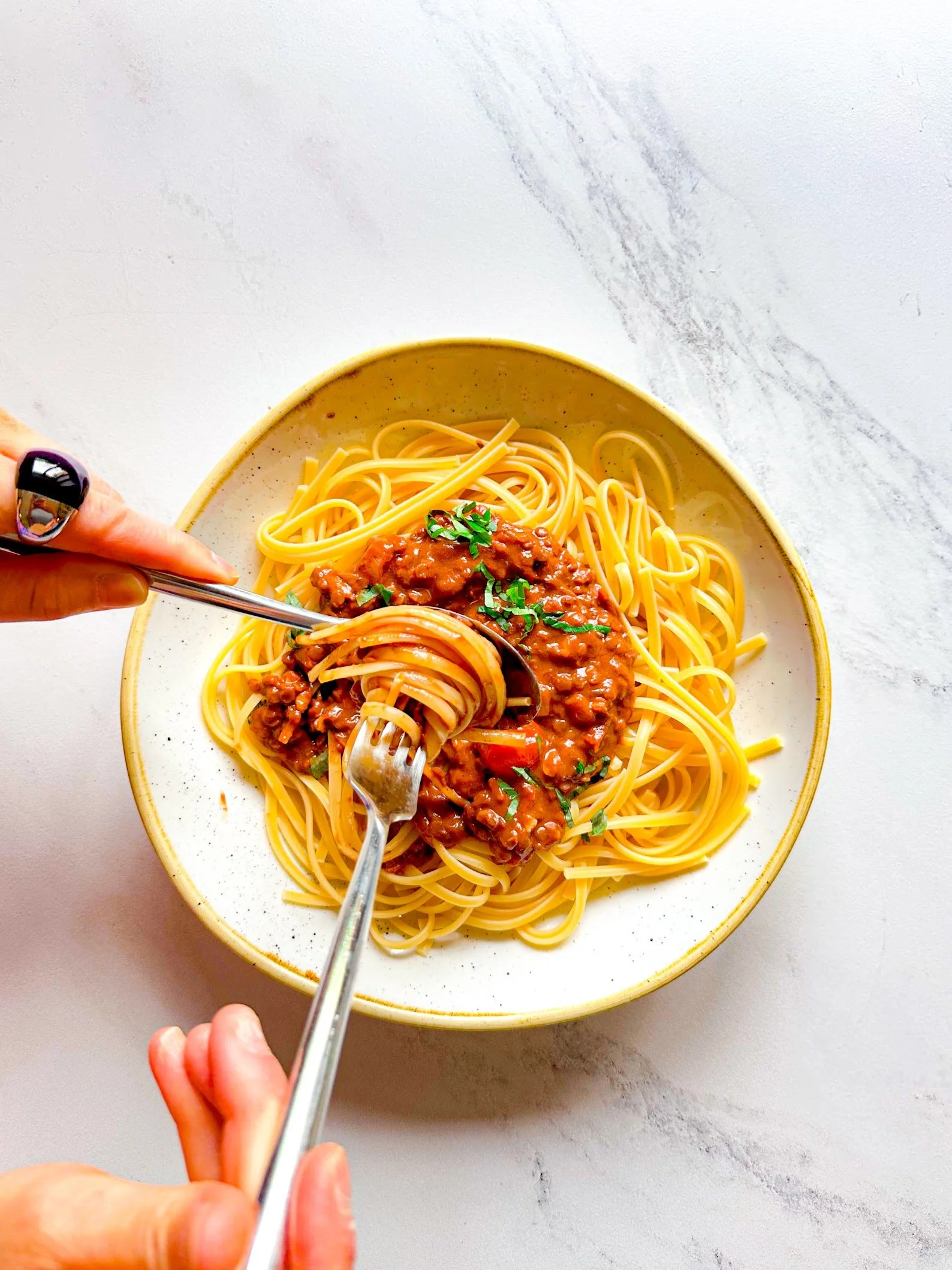
Lentil Bolognese
Swaps: Beef mince → red or green lentils
The one that converts sceptics. Lentils break down into the sauce the same way mince does, and with enough tomato, garlic, and herbs, most people genuinely can't tell the difference — or prefer it. The texture is right thanks to a few secret ingredients, the comfort factor is intact, and it costs a fraction of the meat version. This is the swap to start with if you're testing the waters.

Shepherdless Pie
Swaps: Lamb mince → lentils, chickpeas and root vegetables
Same creamy mash on top, same warming filling underneath — just built from lentils, chickpeas and seasonal veg instead of lamb. The trick is getting the filling rich and savoury enough (tomato pureé, soy sauce, balsamic vinegar, plenty of herbs). Batch cook the filling and freeze portions for busy weeks.

Chickpea Curry and Chips
Swaps: Takeaway curry → homemade chickpea version
A plant-forward take on the Friday night chippy run. Chickpeas hold their shape in a rich, spiced sauce, and oven chips keep it easy. Satisfying, affordable, and ready in about the same time it takes for delivery to arrive — without the delivery cost.
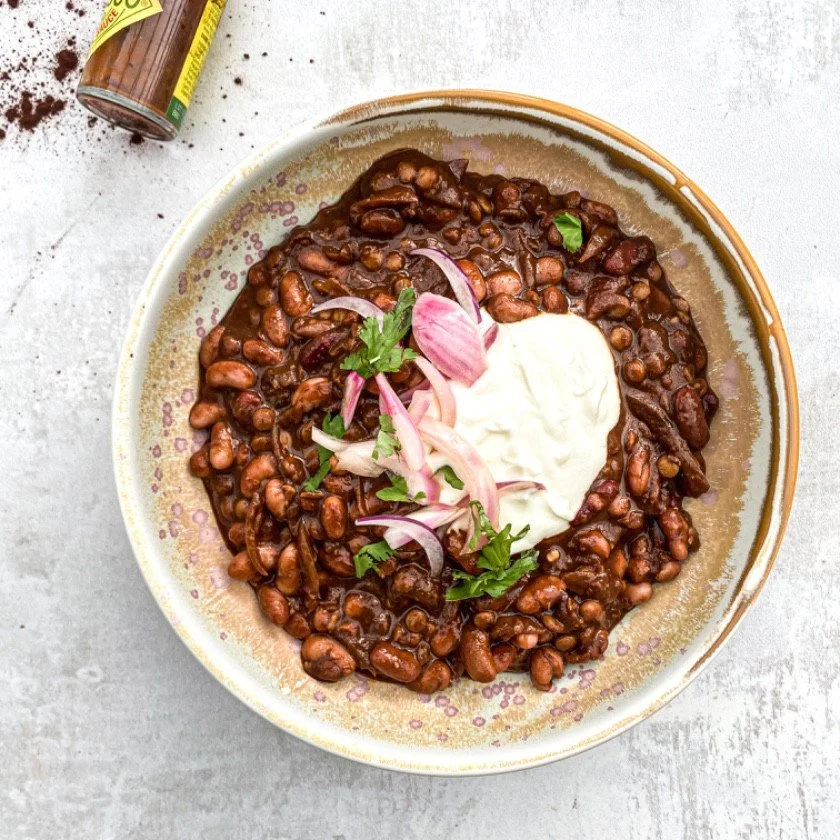
Chilli con Comfort
Swaps: Beef mince → mixed beans and lentils
Chilli is already halfway there — most recipes include kidney beans anyway. This version just leans fully into the legumes, bulked out with lentils for texture. Perfect for batch cooking, freezes brilliantly, and works with rice, jacket potatoes, nachos, or stuffed into wraps. A household staple you can make once and eat three ways.
We add a new swap every month as part of our Family Favourites, Reimagined series.
How to Introduce Meat-Free Meals to Reluctant Meat Eaters
The swap itself is only half the challenge. The other half is getting everyone else on board — especially if you're cooking for kids, teenagers, or partners who eye anything "different" with suspicion.
Don't announce it. Seriously. The question "is this vegetarian?" usually comes after they've already enjoyed it. If you lead with "I'm trying this new meat-free recipe," you've already primed them to notice what's different. Just serve dinner. If someone asks, be honest — but you don't need to open with a disclaimer.
Start with saucy, mixed dishes. Bolognese, chilli, curry, shepherd's pie — these are forgiving because the protein is distributed throughout a flavourful sauce. You're not presenting a slab of tofu and asking people to be excited about it. The swap is almost invisible.
Let people customise. Toppings, cheese, sides — giving people choices creates a sense of control, which reduces resistance. If your kid will eat lentil bolognese as long as there's parmesan involved, that's a win. If someone wants to add a fried egg on top, let them. Flexibility gets results.
One swap a week is enough. Don't overhaul the whole week at once. If Tuesday is now lentil bolognese night, leave the rest of the week alone until that feels normal. Then maybe Friday becomes chickpea curry night. Incremental change sticks; dramatic change often doesn't.
Frame it as something new, not something removed. "I'm trying a new bolognese recipe" lands better than "we're cutting down on meat." One sounds like normal kitchen experimentation. The other sounds like a lifestyle announcement that invites debate.
The Environmental and Financial Case
We're not here to lecture — if you're reading this page, you probably already know that eating less meat has benefits. But a few numbers are worth noting.
On cost: Plant proteins are significantly cheaper than meat equivalents. A 500g bag of dried red lentils costs around €1 and makes multiple family meals. The same weight in beef mince costs €6-8 or more. Over a year of weekly swaps, the savings add up meaningfully — especially with current grocery prices.
On environmental impact: Food production accounts for approximately 26% of global greenhouse gas emissions, with meat (particularly beef and lamb) contributing disproportionately (Poore & Nemecek, 2018). Shifting even one or two meals a week from meat to plant-based reduces a household's food carbon footprint measurably — not through dramatic sacrifice, but through small, sustainable changes.
The point isn't to become vegetarian. The point is that the same small swaps that save money and simplify cooking also happen to be better for the planet. You don't have to choose between practical and principled.
Frequently Asked Questions
Are these recipes vegetarian or vegan?
Most are vegetarian. Many can easily be made vegan by using plant-based butter and skipping the cheese (or using a vegan alternative). Each recipe notes which options are available.
Will these swaps taste like the original?
They'll taste familiar, hearty, and satisfying. Not identical — lentils aren't beef — but equally comforting. In many cases, people prefer the swap once they've tried it. The key is getting the seasoning, texture, and presentation right, which is what our recipes focus on.
Will my kids actually eat these?
That's the whole point. These aren't "healthy" recipes designed to tick nutritional boxes — they're designed to taste like dinner. Lentil bolognese looks and tastes like bolognese. Shepherdless pie looks and tastes like shepherd's pie. Start with the most familiar swaps and go from there.
Do I need special ingredients?
No. Everything in these recipes is available at any supermarket — tinned or dried lentils, chickpeas, beans, everyday vegetables, standard pantry spices. Nothing you'd need to hunt down at a specialist shop.
How much protein do these meals have?
Legumes (lentils, chickpeas, beans) provide substantial protein — 200g of cooked lentils contains approximately 18g of protein. Combined with the carbohydrates in pasta, rice, or potatoes, these are complete, filling meals. (U.S. Department of Agriculture, Agricultural Research Service. FoodData Central)
How much money will I actually save?
It depends on how you shop, but plant proteins are typically 50–70% cheaper than meat equivalents.
To give a concrete example, using prices at the lower end of Irish supermarkets (January 2026): a lentil bolognese that serves eight costs roughly €5, compared to about €12 for a beef version, based on a popular Jamie Oliver recipe. At the higher end of ingredients, that difference grows to around €7 versus €21.
The biggest saving comes from the meat itself. That often frees up budget for better quality ingredients elsewhere — or just stays in your pocket.
Can I meal prep these?
Absolutely. Lentil bolognese, chilli, and shepherdless pie filling all freeze brilliantly. Make a big batch on Sunday, portion it out, and you've got multiple quick dinners sorted for the month.
Start With One Swap
You don't need to overhaul your weekly menu. Pick one family favourite — the one you think will be easiest to swap — and try it this week.
If you want help building these swaps into a weekly meal plan with an automatic shopping list, the Feeds app makes it simple. But the recipes work just as well on their own.
Or join our monthly Family Favourites, Reimagined series and get a new swap delivered to your inbox each month.
Last updated: 11 May 2026
Written by the Feeds team. We're a small Dublin-based company helping households eat better without the overwhelm.